Marine Fuel Flashpoint Safety: Why 2026 SOLAS Rules Change Everything for UAE Vessel Operators
Marine fuel flashpoint testing is about to change forever. Starting January 1, 2026, new SOLAS amendments will fundamentally transform how every vessel operating in UAE waters handles fuel quality verification. For ship operators, technical managers, and bunker suppliers across the Arabian Gulf, marine fuel flashpoint testing isn’t just another regulatory checkbox—it’s mission-critical for safety and compliance.
What is Marine Fuel Flashpoint Testing and Why It Matters
Marine fuel flashpoint testing measures the minimum temperature at which fuel vapors can ignite when exposed to an open flame or spark. This critical safety threshold prevents catastrophic fires and explosions onboard vessels.
SOLAS has long mandated that marine fuel must have a flashpoint of at least 60°C. However, recent incidents across global bunkering hubs—including Singapore, Rotterdam, and ports in the Middle East—have revealed fuel samples testing as low as 47°C. That’s dangerously below the legal limit and represents a severe fire hazard in engine rooms where temperatures routinely exceed 50°C.
This “flashpoint trap” has forced the International Maritime Organization (IMO) to take decisive action through Resolution MSC.520(106), which enters full enforcement on January 1, 2026.
2026 SOLAS Amendments: New Marine Fuel Flashpoint Testing Requirements
The new regulations create unprecedented accountability in marine fuel flashpoint testing. Here’s what’s changing:
1. Mandatory Supplier Declarations
Before any bunkering operation begins, fuel suppliers must provide a certified declaration confirming the fuel meets SOLAS flashpoint requirements through proper marine fuel flashpoint testing. This declaration must specify:
- The exact laboratory test method used (ASTM D93 or ASTM D7094)
- Confirmation that the fuel meets the 60°C minimum threshold
- Full traceability of the fuel batch
No declaration? No bunkering. It’s that simple.
2. Enhanced Bunker Delivery Notes (BDNs)
The Bunker Delivery Note must now explicitly include marine fuel flashpoint testing results:
- The measured flashpoint value, OR
- A formal statement confirming the flashpoint is at or above 70°C
This 10-degree safety margin (70°C vs. 60°C minimum) provides a buffer zone and reflects industry best practice for fuel quality assurance.
3. International Reporting Requirements
If marine fuel flashpoint testing reveals non-compliant fuel, port state authorities are now required to notify the IMO and take action against the supplier. This creates unprecedented global accountability in the bunker supply chain.
For UAE-based operators, this means every fuel delivery at Jebel Ali, Fujairah, or any regional port comes under intensified scrutiny. One bad bunker batch could result in vessel detention, hefty fines, and serious reputational damage.
Why Onboard Marine Fuel Flashpoint Testing Equipment is Essential
Historically, most vessels relied on shore-based laboratories for marine fuel flashpoint testing. Samples would be sent out, results would arrive days later, and by then the fuel was already in your tanks.
That approach is dead in 2026.
Vessels now need immediate verification capability. Advanced onboard marine fuel flashpoint testing equipment has shifted from “nice to have” to “mission-critical” for several reasons:
Speed Saves Operations
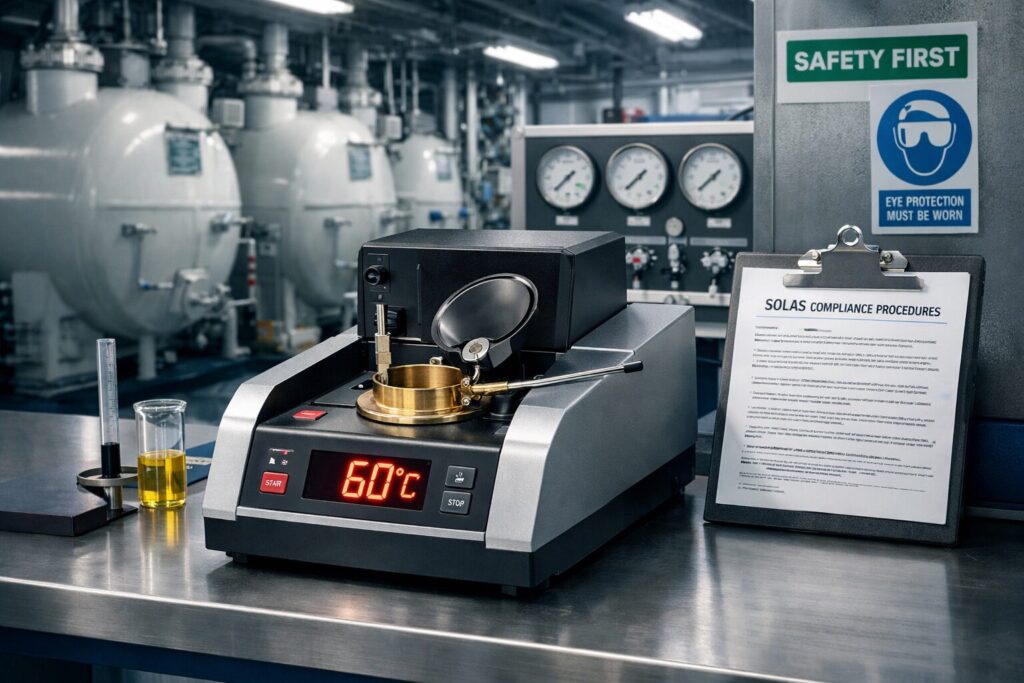
Modern portable marine fuel flashpoint testing equipment using the ASTM D7094 method (Modified Continuously Closed Cup) delivers results in under 12 minutes—nearly twice as fast as traditional Pensky-Martens methods. When your vessel is on a tight departure schedule, that speed difference can mean the difference between on-time sailing and costly delays.
Safety First Design
Traditional marine fuel flashpoint testing equipment like the Pensky-Martens apparatus uses an open flame to ignite fuel vapors—creating inherent fire risk in the testing environment itself. New-generation equipment like the eralytics ERAFLASH uses an electric spark inside a continuously closed chamber, eliminating external fire hazards entirely. For engine room safety officers, this is a game-changer in marine fuel flashpoint testing.
Minimal Sample Requirements
Older marine fuel flashpoint testing methods required large fuel samples (50-100ml), creating disposal and waste management challenges. Advanced portable units like the Stanhope Setaflash Series 3e operate with just 2-4 ml of fuel—drastically reducing waste costs and environmental impact while still delivering laboratory-grade accuracy.
Real-Time Decision Making
With onboard marine fuel flashpoint testing capability, you can verify fuel quality before accepting delivery. If the flashpoint is below specification, you can reject the bunker on the spot—saving your vessel from operational disruption, potential equipment damage, and regulatory violations.
For UAE operators dealing with multiple bunker suppliers across different ports, having your own marine fuel flashpoint testing equipment provides an independent verification layer that protects your fleet from supply chain variability.
Explore advanced marine fuel flashpoint testing equipment and compliance solutions at Swiztech Marine—your trusted partner for marine safety equipment in the UAE.
Chemical Additives: Complementing Marine Fuel Flashpoint Testing
While marine fuel flashpoint testing equipment provides the diagnosis, chemical fuel additives are your preventative medicine. With the global shift toward Very Low Sulfur Fuel Oils (VLSFO) and bio-blended fuels, maintaining fuel stability and combustion efficiency has become exponentially more complex.
Here’s why additives are essential alongside marine fuel flashpoint testing in the post-2026 maritime landscape:
1. Stability and Compatibility Enhancement
When vessels bunker at multiple ports—Fujairah today, Singapore next week—you’re mixing fuel batches from different refineries with varying chemical compositions. Even when marine fuel flashpoint testing shows compliant results, this creates a high risk of asphaltene precipitation, the technical term for sludge formation that can clog filters, damage fuel pumps, and cause engine failure.
Advanced additives like DISPERSOGEN™ 2020 act as chemical stabilizers, ensuring that blended fuel oils remain homogeneous and compatible across your entire voyage. For vessels operating long Gulf-to-Asia routes, this compatibility insurance complements your marine fuel flashpoint testing protocols.
2. Cold Flow Improvers
While UAE waters stay warm year-round, vessels transiting through Northern Europe or high-latitude regions face a different challenge: paraffin wax crystallization. Marine fuel flashpoint testing alone doesn’t address this cold-weather challenge. When temperatures drop, wax particles in fuel can solidify and block fuel lines and filters.
Polymeric additives in the DODIFLOW™ range effectively lower the Pour Point and Cold Filter Plugging Point (CFPP), ensuring smooth fuel handling even in sub-zero conditions. For UAE-based vessels with global trading patterns, this capability extends operational range and eliminates cold-weather fuel handling emergencies.
3. Advanced Combustion Catalysts
Perhaps the most innovative category of fuel additives works alongside marine fuel flashpoint testing to optimize engine performance. These chemical compounds actually change how fuel burns in your engine cylinders.
Products like Fuel Ox Marine® work by lowering the fuel’s ignition temperature, promoting more complete combustion. The result?
- Improved fuel economy (3-8% consumption reduction in field trials)
- Reduced carbon deposits on injectors, pistons, and exhaust valves
- Lower emissions of particulate matter and NOx
- Extended maintenance intervals due to cleaner combustion chambers
For cost-conscious operators watching every dollar in bunker expenses, the ROI on quality fuel additives combined with proper marine fuel flashpoint testing is measurable and significant.
The UAE Context: Why Marine Fuel Flashpoint Testing is Critical Here
Operating in the Arabian Gulf region presents specific challenges that make marine fuel flashpoint testing even more critical:
Extreme Temperatures
UAE summer temperatures regularly exceed 50°C, with deck temperatures reaching 60°C or higher. Fuel stored in these conditions experiences accelerated degradation, increased evaporation rates, and higher risk of flashpoint reduction over time. Regular marine fuel flashpoint testing isn’t just about compliance—it’s about ensuring fuel that was compliant when bunkered remains safe throughout the voyage.
Multi-Port Bunkering
UAE vessels frequently bunker at Fujairah, Jebel Ali, and other regional ports, then top up in Singapore, Rotterdam, or other international hubs. Each bunker batch introduces new variables in fuel chemistry that only proper marine fuel flashpoint testing can verify. Without rigorous testing and additive protocols, you’re essentially playing chemical roulette with your fuel system.
Port State Control Focus
UAE port authorities are increasingly sophisticated in their marine fuel flashpoint testing inspections, aligning with international best practices. As 2026 rules take effect, expect heightened scrutiny of BDNs, increased frequency of fuel sampling, and zero tolerance for non-compliant fuel discovered through marine fuel flashpoint testing.
Building Your Marine Fuel Flashpoint Testing Compliance Strategy
The good news? You don’t need to wait until January 2026 to prepare your marine fuel flashpoint testing program. Here’s your action plan:
Immediate Actions (Next 30 Days):
✅ Audit your current marine fuel flashpoint testing capabilities – Do you have onboard flashpoint testing equipment? Is it calibrated and crew-trained?
✅ Review your bunker supplier contracts – Are suppliers committed to providing compliant declarations with proper marine fuel flashpoint testing documentation?
✅ Assess your fuel additive program – Are you using proven stability enhancers and combustion catalysts alongside your marine fuel flashpoint testing?
Short-Term Priorities (Next 90 Days):
✅ Invest in portable marine fuel flashpoint testing equipment – Prioritize ASTM D7094-compliant equipment for speed and safety
✅ Train your crew on marine fuel flashpoint testing – Engine room staff need hands-on training with new testing procedures and equipment
✅ Establish marine fuel flashpoint testing protocols – Create standard operating procedures for pre-bunkering testing, sample retention, and non-compliance response
Long-Term Foundation:
✅ Partner with reliable marine fuel flashpoint testing equipment suppliers – Build relationships with certified marine equipment suppliers like Swiztech Marine who understand UAE maritime requirements and stock compliant testing gear and chemical additives
✅ Document everything – Create robust record-keeping systems for marine fuel flashpoint testing results, supplier declarations, and additive usage
✅ Stay informed on marine fuel flashpoint testing standards – Monitor IMO updates, port state control trends, and industry best practices as implementation unfolds
The Competitive Advantage of Proper Marine Fuel Flashpoint Testing
Here’s what many operators miss: 2026 SOLAS compliance through rigorous marine fuel flashpoint testing isn’t just about avoiding penalties—it’s a competitive differentiator.
Vessels with documented marine fuel flashpoint testing programs and advanced testing capabilities will:
- Experience fewer port delays due to fuel-related inspections
- Attract premium charters from clients prioritizing safety and reliability
- Reduce maintenance costs through cleaner combustion and better fuel stability
- Lower insurance premiums by demonstrating proactive risk management through marine fuel flashpoint testing
In an industry where margins are tight and delays are expensive, these advantages from proper marine fuel flashpoint testing translate directly to bottom-line profitability.
Marine Fuel Flashpoint Testing: Your 2026 Action Plan
Reports of non-compliant fuel discovered through marine fuel flashpoint testing are already surfacing across major bunkering hubs. Some samples have tested as low as 47°C—a full 13 degrees below the legal minimum. These aren’t isolated incidents; they’re warning signs of systemic supply chain issues that the 2026 rules and enhanced marine fuel flashpoint testing requirements are designed to address.
For UAE vessel operators, the question isn’t whether to invest in marine fuel flashpoint testing capability—it’s how quickly you can build the testing infrastructure and chemical additive protocols that will keep your fleet compliant, safe, and competitive.
Don’t wait for the first detention notice or the first engine room fire scare to take marine fuel flashpoint testing seriously. Invest in proven testing equipment, implement a robust additive strategy, and partner with suppliers who understand the stakes of proper marine fuel flashpoint testing.
Need guidance on building your marine fuel flashpoint testing compliance program? Contact Swiztech Marine today for expert advice on marine fuel testing equipment, chemical additives, and comprehensive safety solutions tailored to UAE maritime operations.
Because when it comes to marine fuel flashpoint testing and fuel safety, compliance isn’t just a regulatory requirement—it’s your responsibility to your crew, your cargo, and the maritime community.